Article Summary
Video wall solutions improve situational awareness by centralizing video, data, and dashboards into a single visual environment so teams can detect issues faster and coordinate responses.
Here you’ll learn:
- How video wall solutions help teams visualize complex data
- Why command centers rely on large, shared displays
- How IP-based workflows improve collaboration
- Best practices for managing content across video walls
For public safety agencies, defense organizations, and government teams, situational awareness is not a luxury. It is the foundation of effective decision-making.
Operators responsible for emergency response, cybersecurity monitoring, military coordination, or critical infrastructure oversight must interpret large volumes of data in real time. Video feeds, dashboards, mapping tools, and intelligence platforms all provide valuable information, but without a way to visualize and organize it effectively, that information can quickly become overwhelming.
Video wall solutions help solve this challenge by transforming scattered data sources into a centralized visual environment where teams can see, understand, and act on information faster.
The Situational Awareness Challenge in Modern Operations
Modern command and control environments operate in a constant flow of information. Teams may be monitoring:
- Unmanned Aerial Vehicle (UAV) and Intelligence, Surveillance, and Reconnaissance (ISR) video feeds
- Body-worn and surveillance cameras
- Cybersecurity dashboards
- Geographic information systems (GIS)
- Incident response platforms
- Weather and environmental data
- Communications and dispatch systems
While each system provides valuable insight, they often exist in separate applications or networks. Without effective visualization, operators must constantly switch between screens, tools, and workstations to understand what is happening. This fragmentation slows response times and increases the risk that critical details will be missed.
Situational awareness requires more than access to data. It requires the ability to visualize multiple sources simultaneously, identify relationships between them, and share that information with teams in real time. This is where video wall solutions play a critical role.
Why Visualization Matters for Situational Awareness
Humans process visual information far more efficiently than text or numerical data. When information is presented in a structured visual format, teams can detect patterns, identify anomalies, and coordinate responses more quickly.
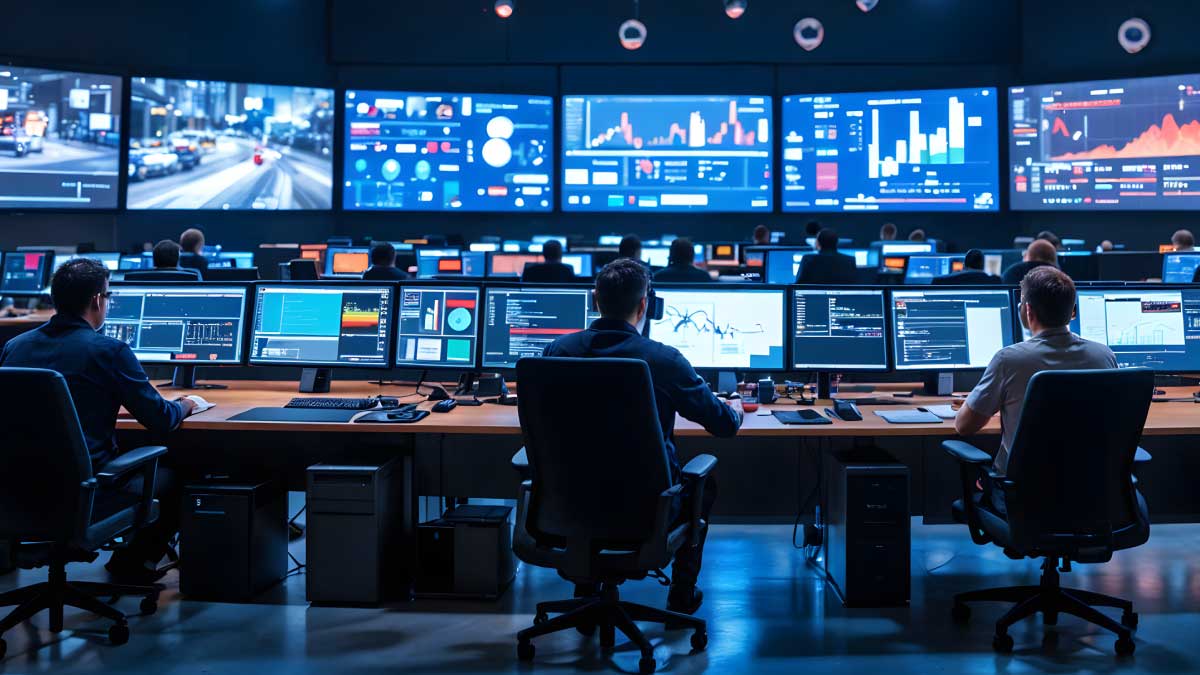
In mission-critical environments, large video walls allow teams to view multiple information streams simultaneously while maintaining a shared operational picture.
Operators can monitor evolving events while supervisors, analysts, and leadership maintain awareness of the broader situation. Rather than relying on individual screens or siloed systems, video walls create a single, shared visual environment that supports collaboration and faster decision-making.
How Video Walls Are Used in Mission-Critical Environments
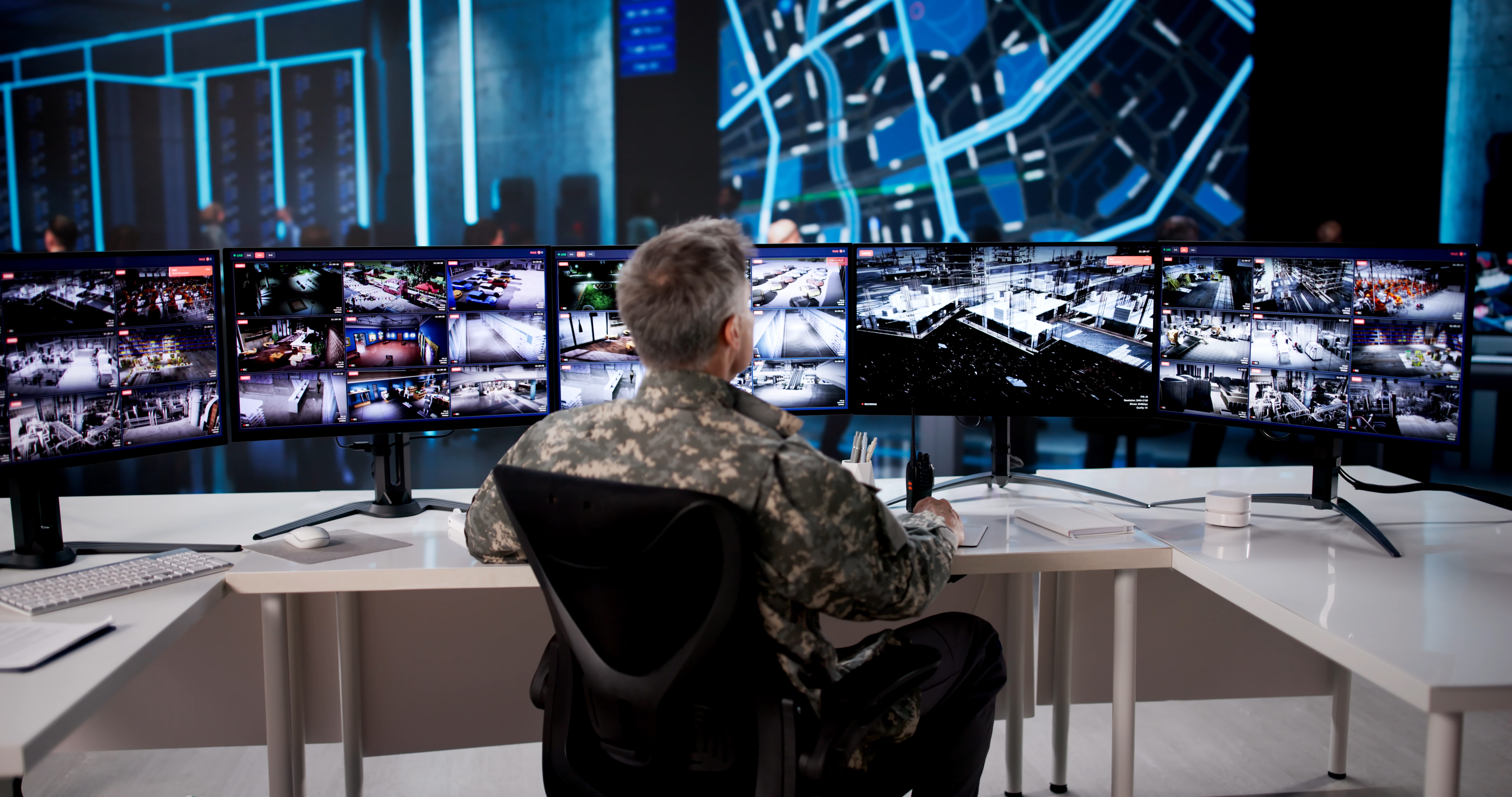
Video walls are now widely deployed across industries where real-time awareness is essential.
According to Aaron Leiker, Vice President of Operation Centers at Haivision:
“Video walls are now used almost everywhere. They are increasingly replacing traditional signage as pricing declines and technology becomes more accessible.”
However, in mission-critical environments such as command centers, the value of video walls extends far beyond display technology.
“In control rooms and command centers, most of the content originates from web-based dashboards, intranet systems, virtual machines, and real-time data feeds. The innovation is less about the physical display and more about how content is securely aggregated, managed, and visualized across the entire video wall.” – Leiker continues.
This shift reflects a broader industry trend: the most important advancements in video wall technology are happening in how information is managed and presented, not just in the display hardware itself.
Bringing Multiple Information Sources Together
One of the greatest benefits of a modern video wall solution is the ability to integrate content from virtually any source. Command centers often rely on dozens or even hundreds of systems operating simultaneously.
These may include:
- Video feeds from cameras, drones, or aircraft
- Web-based monitoring dashboards
- Data visualization tools
- Mapping and geospatial platforms
- Operator workstations and virtual machines
- Live broadcast or situational video streams
Modern video wall solutions allow organizations to combine these sources within a single visual workspace.
Aaron Leiker explains:
“Video wall processing platforms allow content to originate from virtually any source, including websites, operator workstations, native video files, virtual machines, and IP video streams. The system treats the entire video wall as a single logical display.”
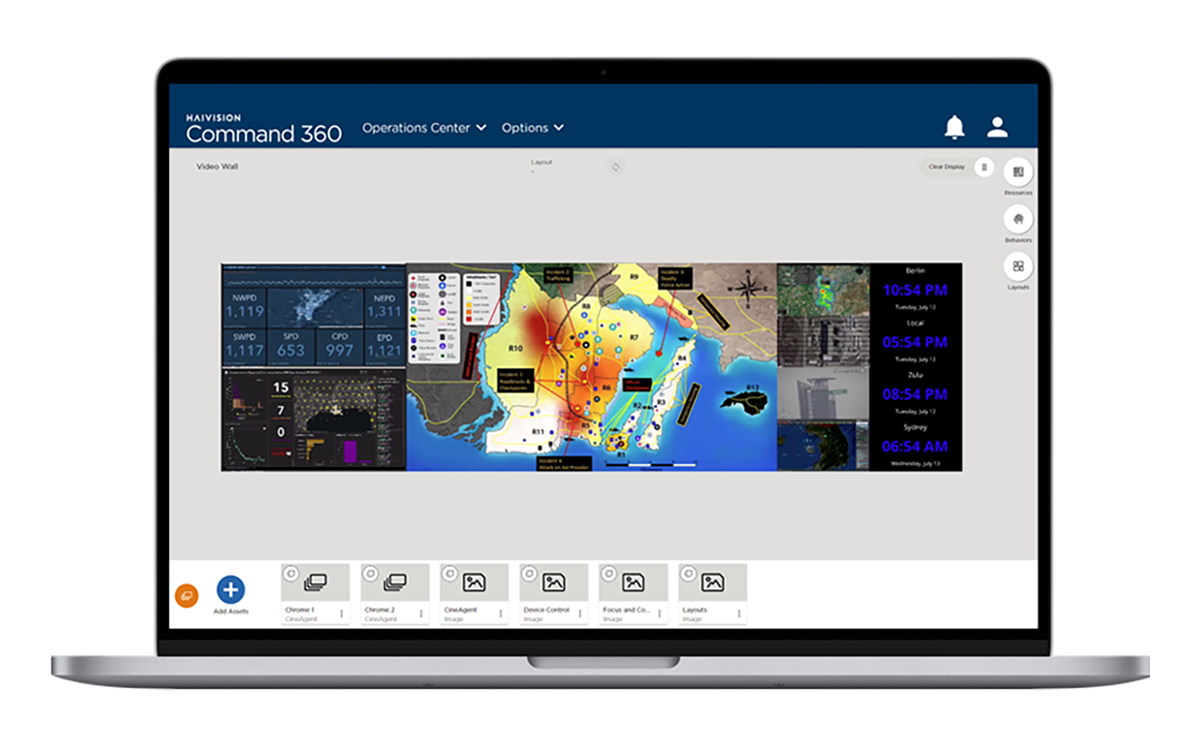
This architecture simplifies operations dramatically. Instead of managing individual displays or fixed inputs, operators can dynamically place, resize, and share content across the entire wall. This flexibility allows teams to adapt the visual environment as situations evolve.
IP-Based Workflows Are Changing Command Centers
Another major advancement in video wall technology is the transition to IP-based content distribution. Historically, video walls relied on dedicated switching infrastructure or fixed AV pathways. While effective, these systems often limited flexibility and made it difficult to share information beyond a single room.
Today, video and data can move securely across IP networks.
Leiker highlights the impact of this shift:
“A core advancement in video wall processing is the move toward IP-based workflows. Content can be captured and distributed across IP networks so it can be securely shared and visualized across the organization.”
This enables new operational capabilities such as:
- Remote collaboration between command centers
- Secure video distribution across facilities
- Shared operational views for leadership teams
- Cross-agency coordination during large-scale events
Instead of being confined to one location, situational awareness can now extend across an entire organization.
Supporting Faster, More Confident Decisions
In high-pressure environments, the speed of decision-making can directly affect outcomes. Video wall solutions help reduce cognitive load by organizing complex information into a clear visual format. Operators can quickly assess the situation, identify relevant information, and coordinate actions with other teams.
This becomes especially important during rapidly evolving events such as:
- Emergency response operations
- Cybersecurity incidents
- Military or intelligence missions
- Infrastructure outages
- Large public events
By providing a shared operational view, video walls help ensure that everyone involved in the response is working from the same information.
Designing Video Walls Around Operational Needs
When organizations deploy video walls, it is tempting to focus primarily on display technology. However, effective deployments start with operational requirements.
Leiker emphasizes this point:
“A key principle in any deployment is that the content strategy should determine the video wall, not the other way around.”
The most successful command center environments begin by identifying:
- What information operators need to see
- How often layouts will change
- How content will be shared across teams
- What security requirements must be met
- How systems integrate with existing networks
Once these needs are defined, organizations can design a video wall ecosystem that supports real-world workflows.
The Role of Video Wall Solutions in Situational Awareness
Ultimately, situational awareness is about transforming information into understanding. Video wall solutions provide the visualization layer that allows teams to interpret complex information quickly and act with confidence. For mission-critical organizations, this capability is essential.
By bringing together video, data, and applications into a unified visual environment, modern video wall solutions help operators maintain clarity even when information volumes are at their highest. Organizations that invest in effective visualization tools are better positioned to respond quickly, collaborate effectively, and maintain operational control when it matters most.