Banana Ball is a high energy, constant entertainment fan-first version of baseball created by Jesse Cole and Emily Cole. Designed to maximize entertainment, the league combines fast-paced rules, high-energy performances, and interactive fan engagement to create a unique sports experience. Featuring 6 professional teams that travel together as a nationwide collective to play a 60-game season, franchises face each another across 75 different stadiums for a total of 190 games nationwide. With the season running from February through October, Banana Ball continues to grow its audience both in-stadium and through digital and broadcast platforms.
Banana Ball has redefined the traditional baseball experience, blending fast-paced gameplay with fan-first entertainment. Designed to be as engaging for viewers at home as for those in the stadium, the league places a premium on high-quality, dynamic broadcasts.
“Our goal as a company is to provide the best experience for the fans that we can. Specifically for the broadcast, we want to make it a better experience than being at the venue in person and Haivision plays a key role in that.”
— Matt Webster,
Head of Technology Systems at Fan First Entertainment
The Challenge
Banana Ball’s production model presents a unique set of challenges driven by both scale and creative ambition. Teams playing two- or three-game series throughout the week which can sometimes result in over 40 dates on the calendar having up to three different games played near or at the same time. The team produces multiple REMI (Remote Integration Model) broadcasts simultaneously to cover all the games, each requiring multiple camera and audio feeds to be transported from the venue to a centralized production hub.
This results in a total of 52 live feeds that need to be transported, synchronized, decoded, and managed in real time without compromising quality and reliability during three simultaneous REMI broadcasts. As the league has grown in scale and visibility, so has the complexity of its live production, which demands a more flexible and resilient IP-based infrastructure.
In addition, the distinct visual identity of the Banana Ball teams adds another layer of the production to consider. The league is known for its vibrant uniforms and energetic on-field performances, requiring exceptional video quality to recreate the atmosphere of being at the game. Maintaining that level of visual quality across IP networks, especially under bandwidth constraints, is critical to delivering the intended fan experience.
Latency is another important factor as each game operates as both an in-stadium show and a live broadcast, with production teams and on-air talent divided between being on-premises at the venue and remotely located in the control room. Any delay in signal transmission can disrupt communication, timing, and the overall flow of the show, making low latency video transport an essential part of the production. Matt Webster, Head of Technology Systems at Fan First Entertainment, explains:
“Low latency is very important. We operate in a very unique environment where our talent and show producers are still on-site so it’s basically two shows happening at once,” said Webster. “We have the broadcast that we put on for the viewers at home and then we have the show for the fans that are at the venue, so there’s a lot of coordination that requires good latency.”
Adding to these challenges is the unpredictability of network conditions across different venues. As a traveling production, Banana Ball must adapt to inconsistent connectivity while still ensuring stable, high-quality transmission. At the same time, the organization distributes its content across a growing mix of platforms, from direct-to-consumer streaming on YouTube to major broadcast partners, requiring a flexible and scalable delivery strategy.
Together, these demands created the need for a robust, end-to-end solution capable of supporting high feed volumes, preserving video quality, minimizing latency, and enabling reliable multi-platform distribution.
The Solution
Banana Ball implemented an end-to-end Haivision workflow to unify and enhance contribution, transport, production, and distribution into a single, cohesive IP-based workflow. By choosing Haivision solutions, the production team can reliably move high-quality video from the field to the control room and out to global audiences with minimal delay.
The solution is built on the following Haivision technologies:
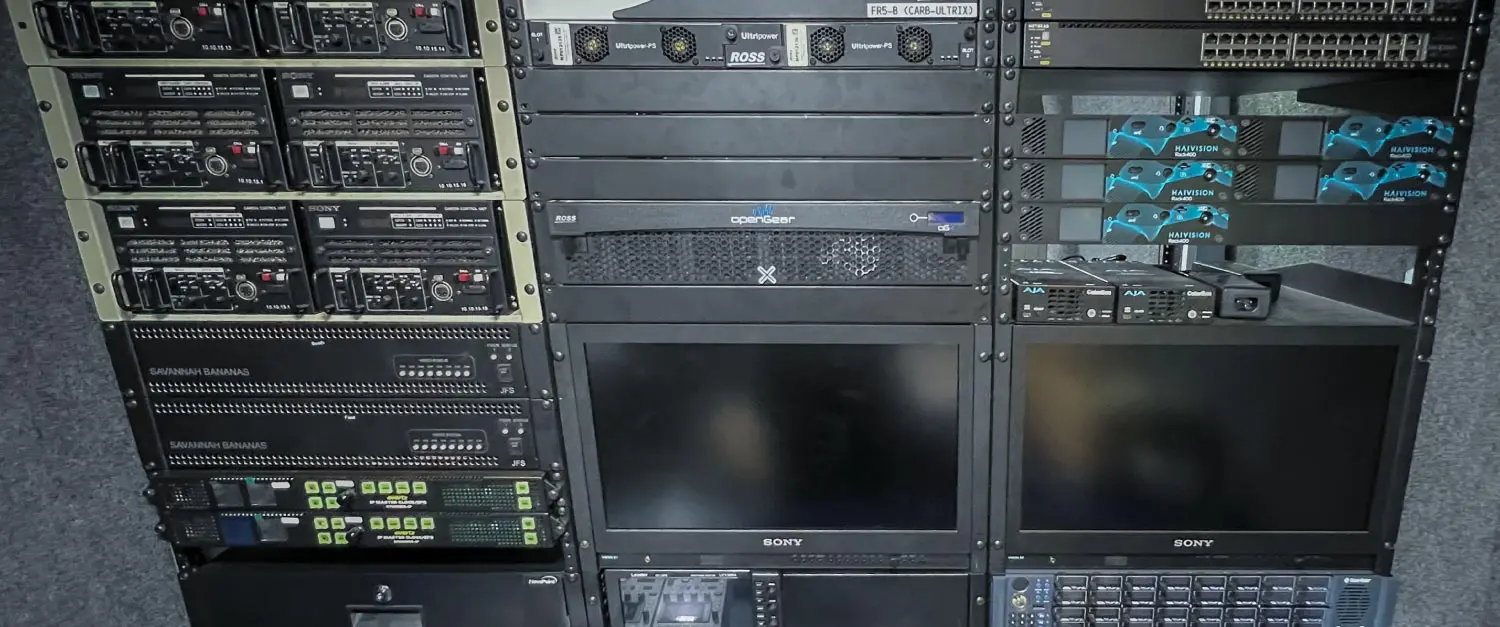
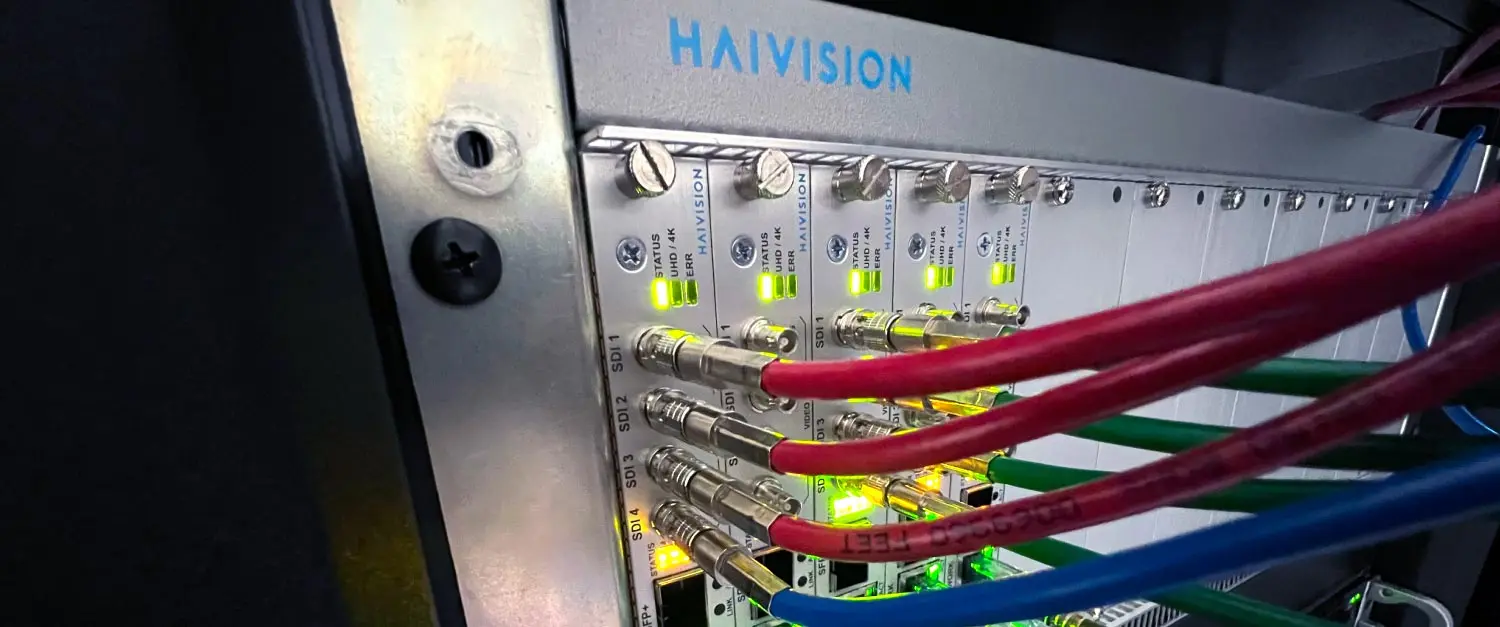
At the venue, camera feeds are captured via SDI, combined with embedded audio, and encoded with Haivision Rack encoders for transport back to the central production facility. Using HEVC (H.265) compression of 4:2:2 10-bit video, the team preserves the rich, vibrant look that defines the brand while still maintaining bandwidth efficiency.
Transport is powered by Haivision’s Safe Streams Transport (SST) protocol, delivering secure, ultra-reliable, low latency video across both wired and wireless networks to StreamHub receivers. By combining Rack encoders with Quad CellLinks, Haivision’s high-performance external cellular modems, the workflow enables customizable load-balancing —leveraging the stability and zero-transmission-cost advantage of wired connectivity while seamlessly incorporating cellular network connections for redundancy.
SST aggregates and dynamically manages all available links, performing real-time bandwidth optimization across Ethernet and cellular connections. This hybrid approach not only maximizes resiliency but also helps control operational costs by minimizing reliance on cellular data when wired bandwidth is available. Adaptive latency, packet recovery, and network-aware routing ensure consistent, broadcast-grade performance even under challenging or fluctuating network conditions.
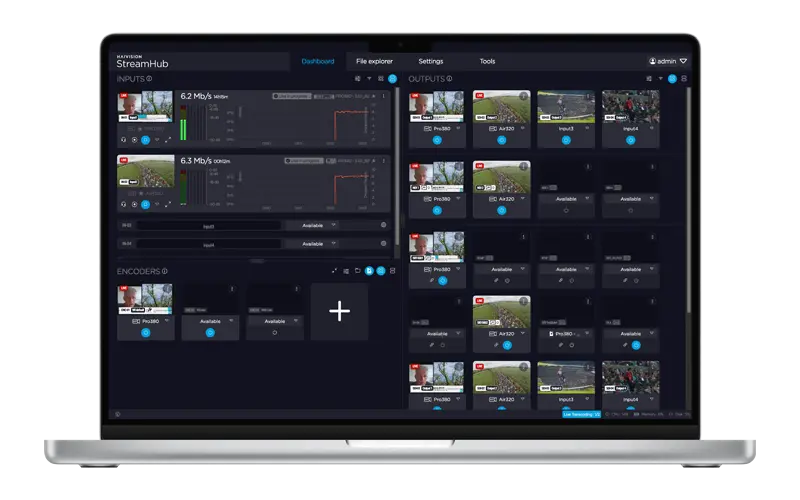
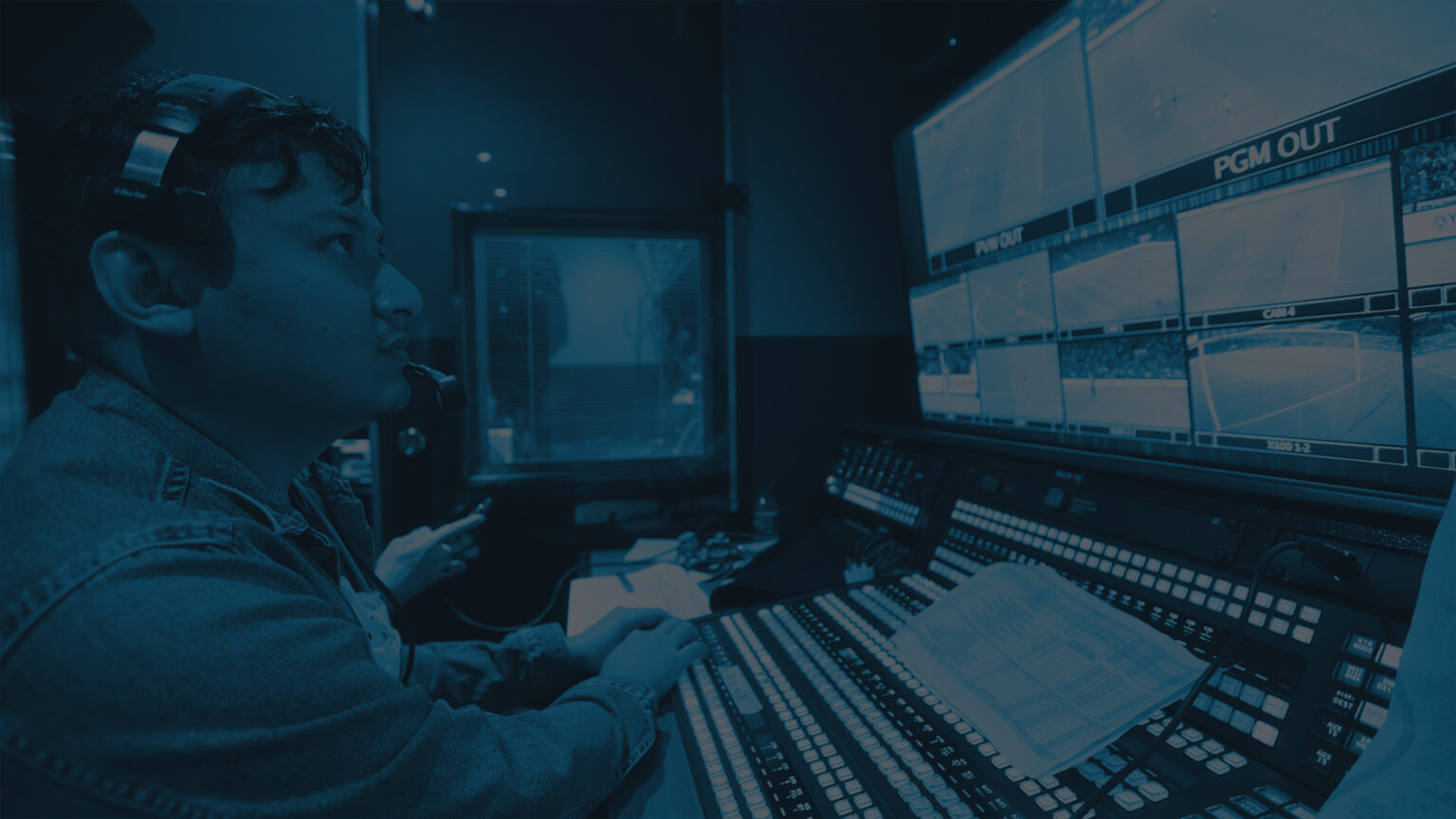
At the centralized production facility, incoming feeds are decoded by Haivision StreamHub receivers and converted back to SDI for integration into traditional live production workflows. Return feeds are sent back to the venue, enabling real-time monitoring and coordination between on-site talent and remote production teams.
The final program outputs are encoded by the Makito X4 video encoders for distribution to a variety of broadcast and online streaming platforms. The program outputs also include ad-insertion markers which are converted from SDI SCTE-104 sources to SCTE-35 for IP video streams.
The flexibility of the Haivision ecosystem allows Banana Ball to support multiple destinations and formats simultaneously, with built-in redundancy for reliability during every stage of the workflow, from contribution to delivery, and is optimized for performance, quality, and scalability.
The Result
By integrating Haivision across its entire workflow, Banana Ball has transformed its live production capabilities to reliably manage dozens of feeds across multiple simultaneous REMI productions while maintaining consistently high-quality video. The combination of ultra-low latency transport and centralized production has improved coordination between on-site and remote teams, enabling smoother, more dynamic broadcasts.
At the same time, the league has expanded its reach, delivering content directly to fans via different channels while supporting distribution to major broadcast and streaming partners. This flexibility allows Banana Ball to meet audiences wherever they are, without compromising quality or reliability.
Most importantly, the upgraded workflow supports the league’s core mission of elevating the fan experience of watching live games from their home.
Receive live feeds from mobile transmitters with a live video receiver for decoding, transcoding, and distribution across broadcast and cloud workflows.
Haivision Pro mobile video transmitters and StreamHub receivers deliver reliable, high quality, low latency coverage for the TCS New York City Marathon.