Article Summary
Haivision’s 2026 Broadcast Transformation Report highlights how broadcasters are evolving their workflows through remote production, SRT, cellular connectivity, and growing interest in AI.
Each year, Haivision’s Broadcast Transformation Report provides a data-driven view into how broadcasters are evolving workflows, infrastructure, and technology investments. Based on insights from more than 1,300 broadcast professionals worldwide, the 2026 edition highlights an industry continuing to modernize while balancing operational realities, budget pressures, and growing production demands.
From remote production to AI and private 5G, this year’s findings reveal how broadcasters are building more flexible, resilient, and efficient live production environments.
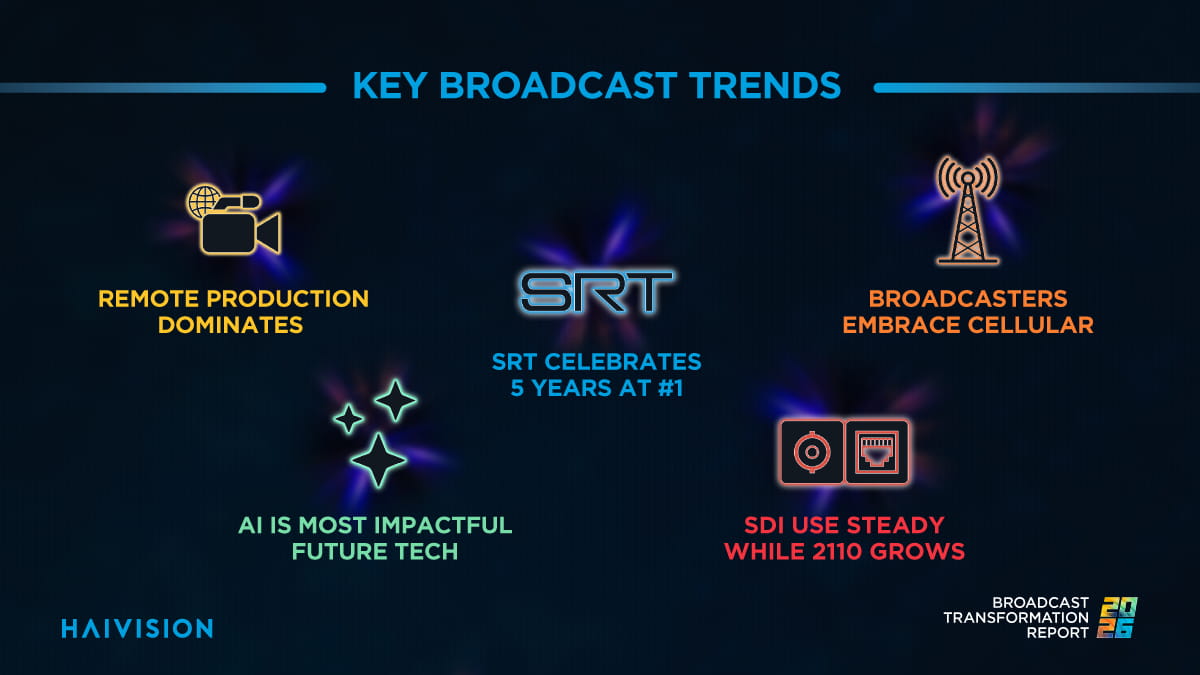
Here are the Top 5 Key Trends Shaping Broadcast Workflows in 2026
1. Remote production dominates tech priorities
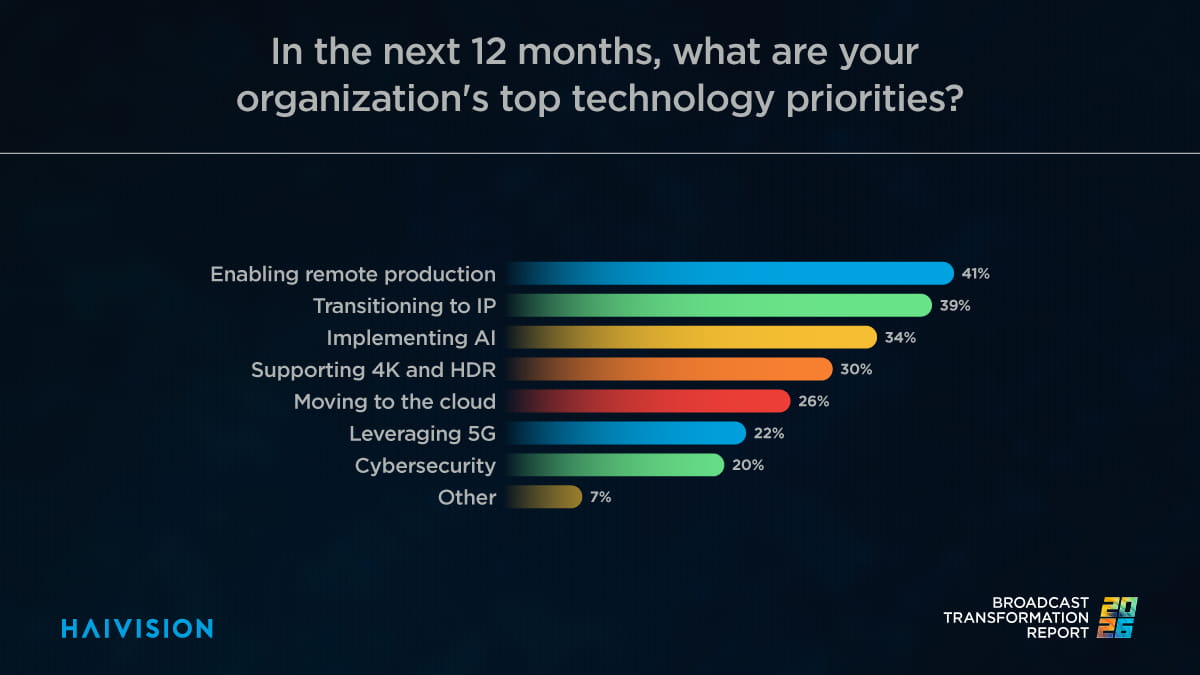
Remote production continues to dominate broadcaster technology strategies, holding the #1 position for the fourth consecutive year.
In 2026, 41% of respondents identified enabling remote production as their leading technology priority.
As production teams seek to cover more events with fewer resources, remote workflows allow broadcasters to reduce travel costs, centralize operations, and scale live productions more efficiently.
This ongoing shift reflects a broader transformation toward distributed production models powered by IP connectivity and flexible infrastructure.
2. SRT celebrates 5 years at #1
Reliable video transport remains essential for modern broadcast workflows, and SRT continues to lead the industry.
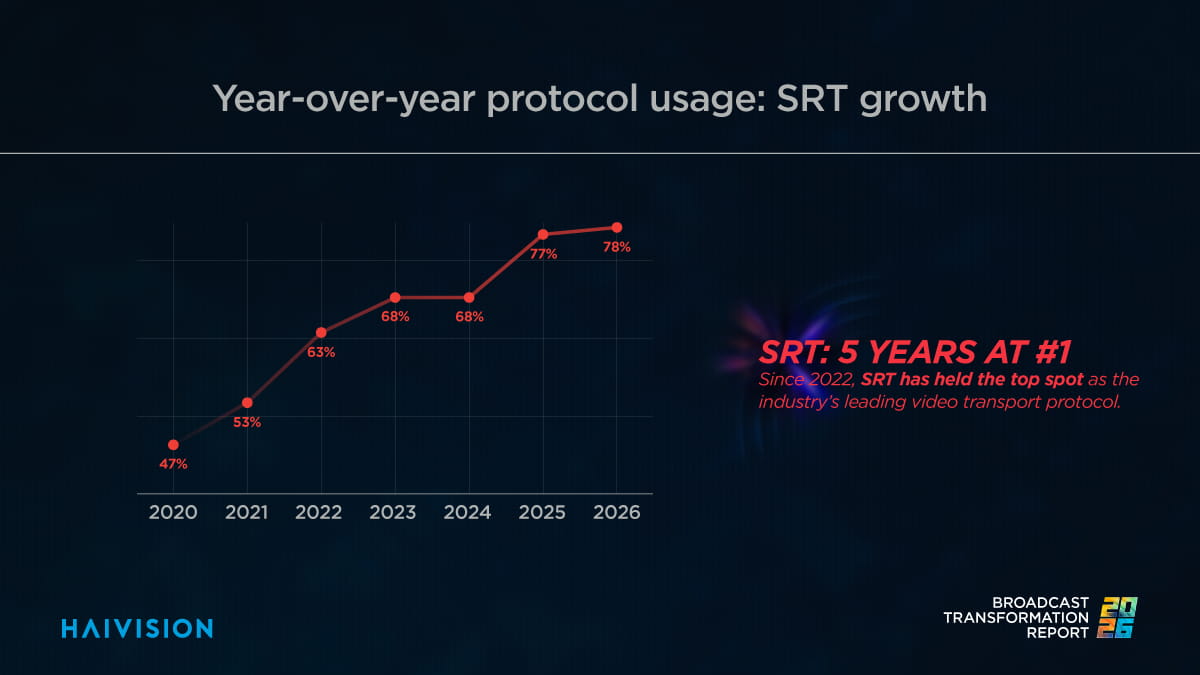
Originally developed and open-sourced by Haivision, SRT adoption has grown from 47% in 2020 to 78% in 2026, maintaining its position as the most widely used video transport protocol for five consecutive years.
The continued growth of SRT highlights broadcasters’ need for secure, low latency streaming across unpredictable network environments and reinforces the industry’s transition toward IP-based contribution.
3. Broadcasters embrace cellular for live video contribution and redundancy
Broadcasters are increasingly relying on cellular networks to support live video contribution.
In 2026:
- 54% of broadcasters use cellular networks for contribution workflows
- 72% use public cellular networks in live production environments
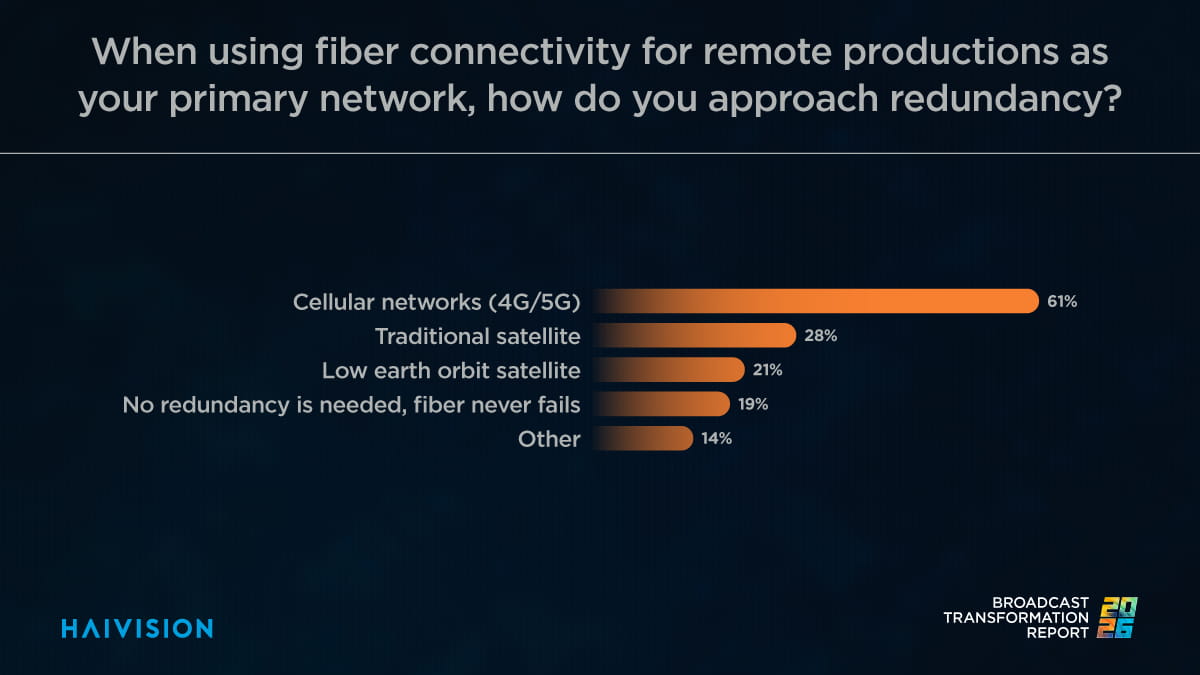
- 61% rely on cellular networks as backup connectivity to fiber
These results demonstrate how wireless connectivity is no longer experimental but foundational to live production.
4. AI tops list as most impactful future technology
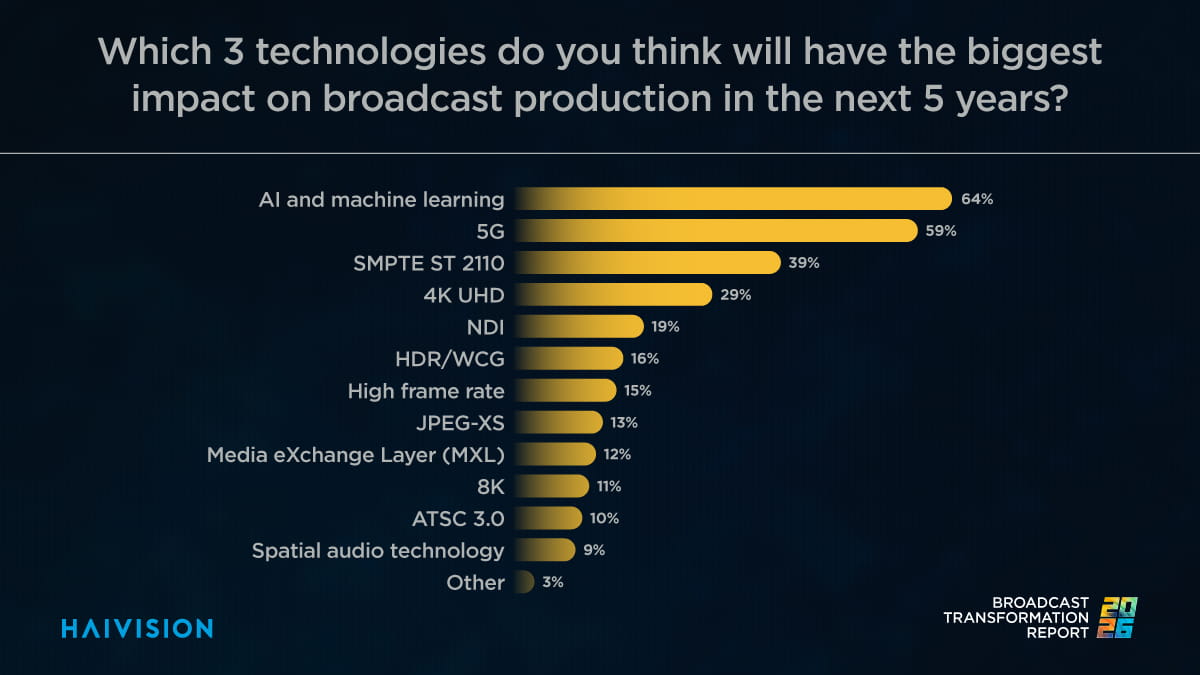
Artificial intelligence remains the technology expected to have the greatest long-term impact on broadcast workflows.
64% of respondents identified AI and machine learning as the technology most likely to transform production over the next five years.
While current adoption sits at 27%, broadcasters increasingly view AI as a driver of operational efficiency, automation, and enhanced content creation capabilities.
Rather than rapid disruption, the data suggests steady, practical adoption as organizations integrate AI into real production environments.
5. SMPTE ST 2110 adoption is growing, but SDI still dominates
Despite continued innovation, traditional infrastructure remains critical.
The 2026 report shows an industry balancing modernization with operational stability:
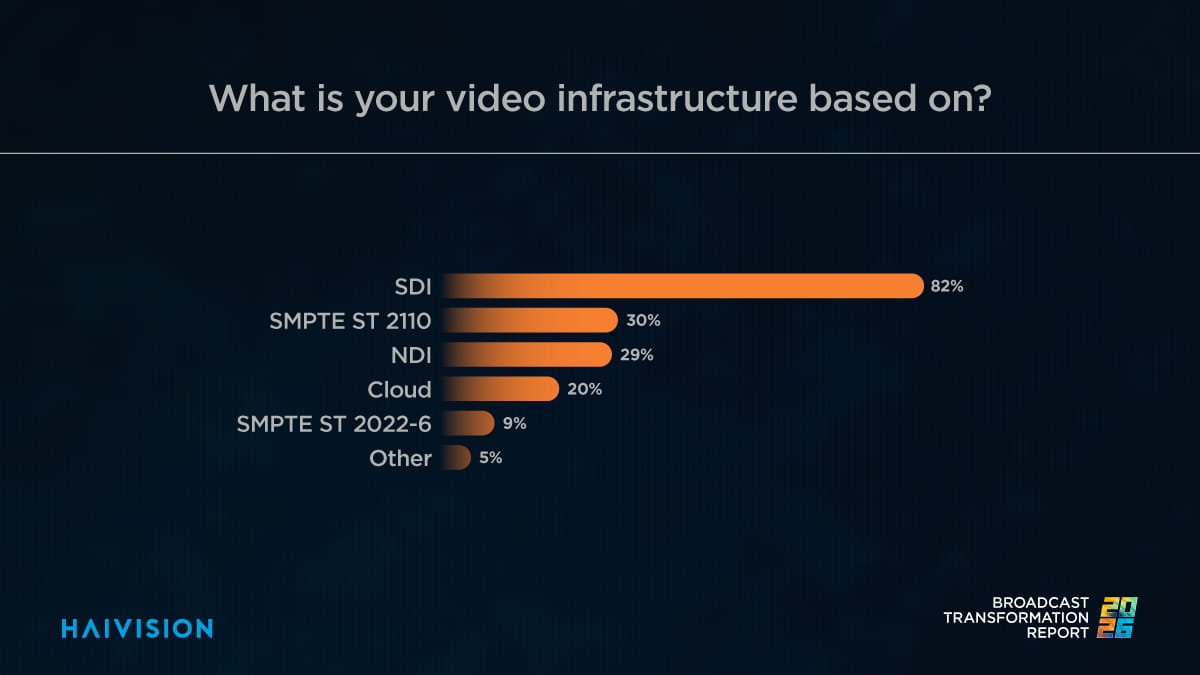
- 82% of broadcasters still rely on SDI infrastructure
- 30% of broadcasters have adopted SMPTE ST 2110, up 4% from 2025
While SMPTE ST 2110 adoption is rising, SDI remains the backbone of most broadcast operations.
Methodology and Demographics
The 2026 Broadcast Transformation Report is based on a global survey conducted between October and December 2025, gathering insights from more than 1,300 broadcast professionals worldwide. The participants represent a diverse range of organizations and roles, providing a comprehensive snapshot of today’s broadcast industry landscape.
To explore the full findings, download the report: Haivision Broadcast Report 2026